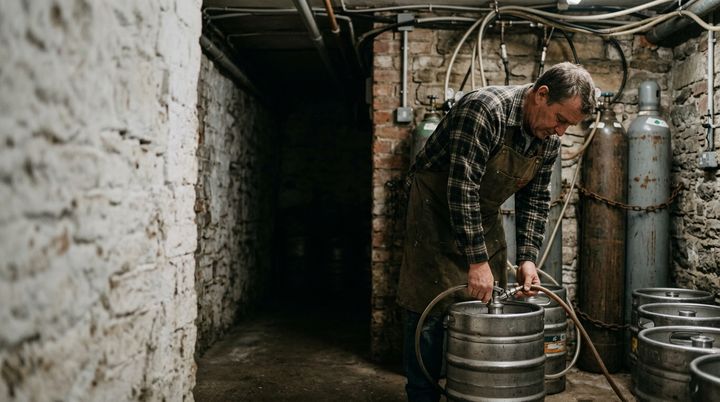
Cellar Management
What is cellar management? Temperature, line cleaning, gas safety and stock in a pub or bar cellar

Liam Jones

Founder of Pilla
Date Modified
22 November 2026


Date modified: 22nd November 2026 | This article has been written by Pilla Founder, Liam Jones, click to email Liam directly, he reads every email.
Cellar management is looking after the beer, the lines, the gas and the stock in a pub or bar cellar, so every pint pours right and nothing goes to waste. Here is what it covers, the daily and weekly routines, and how to keep gas safe.
Article Content
Cellar management is the work of looking after a pub or bar cellar: keeping it at the right temperature, cleaning the beer lines, handling casks and kegs properly, managing the gas, rotating stock and keeping the space clean and safe. A well-run cellar is where good pints come from. A badly run one shows up as cloudy beer, fobbing taps, sour tastes, complaints and a lot of beer poured down the drain.
It's also a workplace with its own hazards. Kegs are heavy, floors get wet, and the gas used to dispense beer can build up in a closed cellar without anyone noticing.
Cellar management at a glance
- Temperature is the foundation. A steady, cool cellar keeps beer in condition. Many brewers recommend about 11°C to 13°C for cask beer.
- Clean the lines regularly, following the brewer's or equipment maker's schedule, or yeast and bacteria build up and spoil the taste.
- Rotate stock so the oldest casks and kegs are used first, within their dates.
- Cask beer needs time: to settle, condition and be ready to serve once tapped.
- Handle gas safely. Secure cylinders upright, keep the cellar ventilated, and use a gas alarm.
- Keep records of temperatures, line cleans, deliveries and waste. They show where money is going.
What it is, and why it matters
Why the cellar matters to the pint
Beer is a living product, especially cask ale, which finishes conditioning in the pub's cellar. Temperature, cleanliness and time all change how it tastes, looks and pours:
| Problem in the glass | Common cellar cause |
|---|---|
| Cloudy or hazy beer | Cask not settled, disturbed, or served too cold |
| Sour or vinegary taste | Dirty lines, beer past its best, or a cask open too long |
| Flat beer | Cellar too warm, cask open too long, gas pressure too low |
| Fobbing, too much foam | Cellar or lines too warm, gas pressure wrong, dirty lines |
| Off flavours | Dirty lines, dirty couplers or taps, beer stored near strong smells |
A worked example
A pub notices its best-selling cask ale is pouring flat and slightly sour by the weekend, and customers are sending it back. The manager checks the cellar records. The line clean has slipped from weekly to every two to three weeks because the team are busy. And the cellar cooler has been struggling since the summer, so the cellar is running a few degrees warmer than it should.
Two changes fix it. The cooler gets serviced and the cellar temperature goes on the bar opening checklist, with an alert if it's out of range. And the line clean goes back on a fixed weekly day, with a check box and a photo of the clean water running through. Within a fortnight, returns drop and the waste log shrinks.
How it works in practice
Temperature
Keep the cellar cool and steady. Swings in temperature are as bad as the wrong temperature. Check the thermometer at least once a day and record it. Keep the door closed, keep the cooler clear and serviced, and don't store anything warm or smelly in the cellar.
Keg beer is usually chilled further on its way to the bar through a cooler or python, so check that equipment is working too.
Line cleaning
Beer lines build up yeast, bacteria and beer stone over time. Clean them on the schedule your brewer or equipment maker recommends, which for many pubs is weekly:
- Disconnect the kegs and casks, and connect the lines to the cleaning system.
- Flush the beer out with clean water.
- Fill the lines with line cleaner at the right dilution and leave it for the time on the label.
- Flush the cleaner out with plenty of clean water until it runs clear and no cleaner is left.
- Clean the couplers, taps, nozzles and drip trays.
- Reconnect, pull through until beer runs clear, and taste-check before serving.
Handle line cleaner with care, as it's a hazardous chemical. Wear the PPE on the label and follow your hazardous substances assessment.
Cask beer
- Stillage casks as soon as they arrive, so they can settle without being moved again.
- Vent and tap them when they're settled, then let them condition until clear and ready, which can take a day or more.
- Check clarity, smell and taste before putting a cask on sale.
- Once a cask is on, it has a limited life, often a few days, so match cask sizes to how fast you sell.
Kegs
- Store kegs cool and upright, and connect them carefully.
- Check gas pressure matches what the brewer recommends for that beer.
- Change empties promptly, and return them to the supplier.
Stock rotation and records
Rotate stock so the oldest casks and kegs are used first, within their dates. Our guide to FIFO stock rotation covers how. Record deliveries, line cleans, temperatures and waste, including beer thrown away from line cleans and returns. Comparing what was delivered, what was sold and what's left is how pubs find losses, which is what a stock reconciliation does.
Cleaning the cellar
Keep the cellar floor clean and dry, the drains clear, and the walls and stillage free of mould. Spilt beer attracts flies and makes floors slippery. A deep clean of the cellar and bar equipment belongs in your semi-annual bar cleaning checklist, with regular cleans in between.
Gas safety
Most keg beer, and some cask systems, use carbon dioxide or a mixed gas to dispense. Carbon dioxide is heavier than air, has no smell and can build up at floor level in a closed cellar. At high levels it causes breathing problems, confusion and unconsciousness, and it can kill.
| Hazard | Control |
|---|---|
| Gas building up in the cellar | Good ventilation, a gas detector with an alarm, and a sign on the door |
| Leaks from cylinders, regulators and pipes | Regular checks, and leaks fixed by a competent person |
| Cylinders falling over | Secure them upright with chains or brackets |
| Damaged or old cylinders | Use cylinders from your gas supplier, and report damage |
| Someone collapsing in the cellar | If the alarm sounds or someone collapses, don't go in. Get out, ventilate, and call for help |
Train staff to know what the gas alarm sounds like and what to do when it goes off.
Manual handling
Full kegs and casks are heavy and awkward. Use a keg lift, a drop or a trolley where you can, roll kegs rather than lifting them, and train staff in safe techniques. Our guide to manual handling covers this.
Common mistakes and myths
| What people say | What's actually true |
|---|---|
| "Colder is always better" | Too cold and cask beer goes hazy and loses flavour. Keep it at the right, steady temperature |
| "We can skip a line clean when we're busy" | Dirty lines spoil the taste and cost more in waste and returns |
| "A bit of cleaner left in the lines is fine" | Line cleaner is a hazardous chemical. Flush until it's all gone |
| "Cask beer is ready as soon as it's tapped" | It needs time to settle and condition first |
| "We'd smell a gas leak" | Carbon dioxide has no smell. Use a gas alarm |
| "The cellar's fine as a store room" | Clutter blocks airflow, hides pests and makes spills and trips more likely |
Rules where you are
The rules on gas safety in cellars, drink hygiene and licensing differ by country. These regulators keep their own pages up to date, so check yours:
- Great Britain: the Health and Safety Executive, general hazards of carbon dioxide and gas safety in catering and hospitality
- Ireland: the Health and Safety Authority, cellar safety: a CO2 case study
- United States: OSHA, carbon dioxide asphyxiation hazard when filling CO2 supply systems, plus your state's workplace safety rules
- Canada: the Canadian Centre for Occupational Health and Safety, carbon dioxide, plus your province's workplace safety regulator
FAQ
What temperature should a beer cellar be?
Many brewers recommend about 11°C to 13°C for cask beer, kept steady. Check the brewer's guidance for the beers you sell, and record the cellar temperature daily.
How often should beer lines be cleaned?
Follow your brewer's or equipment maker's schedule, which for many pubs is weekly. Skipping cleans lets yeast and bacteria build up and spoils the taste.
Why does my beer taste sour?
Common causes are dirty lines, a cask that's been open too long, or beer kept too warm. Check when the lines were last cleaned and how long the cask has been on.
Is carbon dioxide in a cellar dangerous?
Yes, at high levels. Carbon dioxide has no smell, is heavier than air and can build up in a closed cellar. Keep it ventilated, use a gas alarm and never go in to help someone who has collapsed without making sure it's safe.
How long does a cask of beer last once tapped?
Often a few days, depending on the beer and the cellar. That's why it helps to match cask sizes to how quickly you sell each beer.