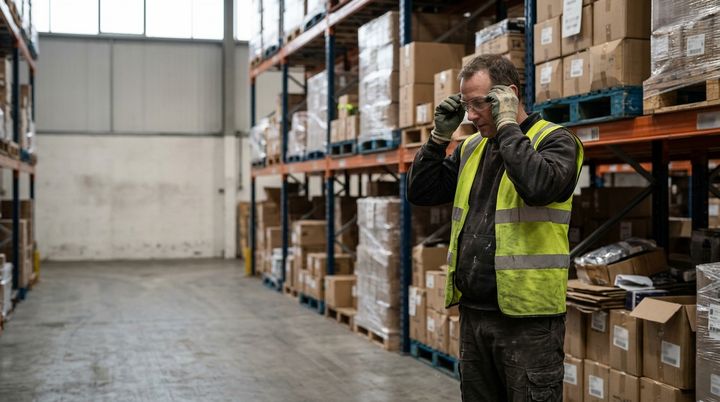
PPE
What is PPE? Why it's the last line of defence, and how fit, care and replacement keep it working

Liam Jones

Founder of Pilla
Date Modified
22 November 2026


Date modified: 22nd November 2026 | This article has been written by Pilla Founder, Liam Jones, click to email Liam directly, he reads every email.
PPE is the equipment people wear to protect themselves from a hazard at work, such as gloves, goggles and safety shoes. Here is why it comes last in the order of controls, how to pick the right kit, and how fit, care and replacement keep it working.
Article Content
PPE, or personal protective equipment, is anything a person wears or holds to protect themselves from a hazard at work. Gloves for cleaning chemicals, goggles for descaling, cut-resistant gloves for a slicer, oven gloves, slip-resistant shoes, hi-vis vests, ear defenders and face masks are all PPE.
PPE only protects the person wearing it, only while they wear it, and only if it fits and is in good condition. That's why it's the last line of defence. You reach for it once you've done what you can to remove or reduce the hazard in other ways.
PPE at a glance
- PPE is kit worn to protect the wearer from a hazard at work.
- It comes last. First remove the hazard, swap it for something safer or control it at source. PPE covers what's left.
- It has to suit the hazard. A food-handling glove won't stop a strong chemical. A latex glove won't stop a knife.
- It has to fit the person. Gloves too big, goggles that fog and shoes that pinch don't get worn.
- It wears out. Check it before use, store it properly and replace it when it's damaged or past its life.
- People need training in why, when and how to use it, and how to tell when it's no good.
What it is, and why it matters
Why PPE comes last
The best way to protect people is to take the hazard away. Safety professionals use an order of controls, often called the hierarchy of controls:
| Order | Control | Example in a kitchen |
|---|---|---|
| 1 | Remove the hazard | Buy pre-diced onions so nobody uses the mandoline |
| 2 | Swap it for something safer | Use a milder oven cleaner instead of a caustic one |
| 3 | Control it at source | Fit a guard on the slicer, an extractor over the fryer |
| 4 | Change how the work is done | Train staff, limit who uses the slicer, clean ovens when cool |
| 5 | PPE | Cut-resistant gloves for the slicer, chemical gloves and goggles for oven cleaning |
PPE is last because it relies on everything going right: the right kit, the right size, in good condition, worn properly, every time. A guard on a slicer protects everyone, all the time. A glove only protects the hand inside it, when someone remembers to put it on.
In practice most jobs use several controls at once. The point is not to reach for PPE first and stop there.
A worked example
A cleaning team uses a strong descaler on toilets. Two cleaners have had sore, cracked hands, and one got a splash in the eye. The supervisor's first idea is better gloves.
Working through the order of controls gives a better answer. The hazardous substances assessment finds a milder product that does the job. It comes pre-diluted, so nobody pours concentrate. Cleaners use a trigger spray instead of a bucket, which cuts splashing. And for what's left, they wear nitrile gloves long enough to cover the wrists, and wrap-around safety glasses. The sore hands stop, and nobody's been splashed since.
How it works in practice
Choosing the right PPE
Start with the hazard from your risk assessment, then pick kit made for it. The product information should say what it protects against and how well.
| Hazard | Common PPE | Things to check |
|---|---|---|
| Chemicals on skin | Chemical-resistant gloves, aprons | The glove material suits the chemical, and how long it holds out against it. The product's safety data sheet usually says |
| Splashes to the eyes | Safety glasses, goggles, face shields | Wrap-around or sealed for liquids, anti-fog where needed |
| Cuts | Cut-resistant gloves or sleeves | The cut level suits the task, and the glove fits snugly |
| Heat and burns | Oven gloves, heat-resistant gauntlets | Long enough to cover the wrist and forearm, dry, not worn thin |
| Slips | Slip-resistant footwear | Grip suited to wet, greasy floors |
| Falling objects | Safety footwear with toe protection | Fit and comfort for a full shift |
| Being seen | Hi-vis clothing | Clean and bright, the right class for traffic nearby |
| Noise | Ear plugs, ear defenders | Enough protection without cutting people off from alarms |
| Dust, fumes, infection | Masks and respirators | The right type for the hazard. Tight-fitting respirators need a fit test |
Fit and comfort
If PPE is uncomfortable, people take it off. Offer different sizes, involve the people who'll wear it in choosing it, and check that pieces work together: safety glasses that fog under a mask, or ear defenders that don't fit over a helmet, won't be worn properly. Think about people with different body shapes and sizes, and anyone with a skin condition or allergy, such as a latex allergy.
Checks, storage and replacement
PPE fails quietly. A glove with a pinhole, goggles with a cracked lens or a respirator with a used-up filter look fine at a glance.
- Check before use. Holes, tears, cracks, worn grip, broken straps, stiff or perished material.
- Clean it as the maker says, if it's reusable.
- Store it properly, clean, dry and away from heat, sunlight and chemicals. A glove left in a bucket of chemicals is ruined.
- Replace it when it's damaged, contaminated, past its use-by date or past the time the maker says it lasts.
- Keep spares so nobody has to work without it while waiting for a replacement.
Our PPE condition check turns this into a quick routine, with a photo when something needs replacing.
Training
People need to know which PPE to use for which task, why it matters, how to put it on, adjust it and take it off without contaminating themselves, how to check it, and who to tell when it's damaged. Our PPE training is built around those points.
Common mistakes and myths
| What people say | What's actually true |
|---|---|
| "Just give them gloves" | PPE comes last. Look at removing or reducing the hazard first |
| "Any glove will do" | Glove materials protect against different things. Check it suits the hazard |
| "Hygiene aprons and hairnets are PPE" | Clothing worn to protect the food from the worker isn't PPE, which protects the worker |
| "One size fits all" | Badly fitting PPE gets taken off or doesn't protect |
| "It's still on the shelf, so it's fine" | PPE wears out and some has a shelf life. Check it before use |
| "Disposable gloves can be reused if they look clean" | Single-use means single use |
| "Wearing PPE means the job is safe" | It reduces the risk that's left. The job still needs the other controls |
Where it fits
PPE appears in most risk assessments, because most tasks have some risk left over after other controls. Look for it in your COSHH risk assessment for cleaning chemicals, your work equipment risk assessment for slicers and mixers, your coffee machine risk assessment for steam and descaler, and your biohazard clean-up procedure for body fluids. Lone workers need their PPE with them too, which is covered in the lone working risk assessment. Manual handling sometimes calls for grippy gloves or safety footwear, covered in our manual handling guide.
Rules where you are
What employers must provide, who pays for PPE, which workers it covers and the standards it must meet differ by country. These regulators keep their own pages up to date, so check yours:
- Great Britain: the Health and Safety Executive, using PPE to control risks at work
- Northern Ireland: HSENI, personal protective equipment
- Ireland: the Health and Safety Authority, personal protective equipment
- United States: OSHA, personal protective equipment
- Canada: the Canadian Centre for Occupational Health and Safety, designing an effective PPE program, plus your province's workplace safety regulator
- Australia: Safe Work Australia, personal protective equipment
- New Zealand: WorkSafe, PPE: a guide for businesses
FAQ
What is PPE?
Personal protective equipment: anything worn or held to protect a person from a hazard at work. Common examples are gloves, safety glasses, safety footwear, hi-vis clothing, hearing protection and masks.
Why is PPE the last line of defence?
It only protects the person wearing it, only when it's worn properly and only if it's the right kit in good condition. Removing or controlling the hazard first protects everyone, all the time.
How often should PPE be replaced?
When it's damaged, worn, contaminated or past the time the maker says it lasts. Single-use items, such as disposable gloves, are replaced after each use. Check reusable PPE before every use.
Are aprons PPE?
It depends what they're for. An apron worn to keep food safe from the worker is food hygiene clothing. A chemical-resistant apron worn to protect the worker from splashes is PPE.
What PPE do kitchen staff need?
It depends on the tasks. Commonly: slip-resistant shoes, oven gloves, cut-resistant gloves for slicers and mandolines, and chemical gloves and eye protection for cleaning and descaling. Your risk assessment should list what each task needs.